
OpenAI Codex App Isn’t a “Cursor Killer.” It’s the First Real Agent Command Center.
Codegen is table stakes. Coordination is the product.

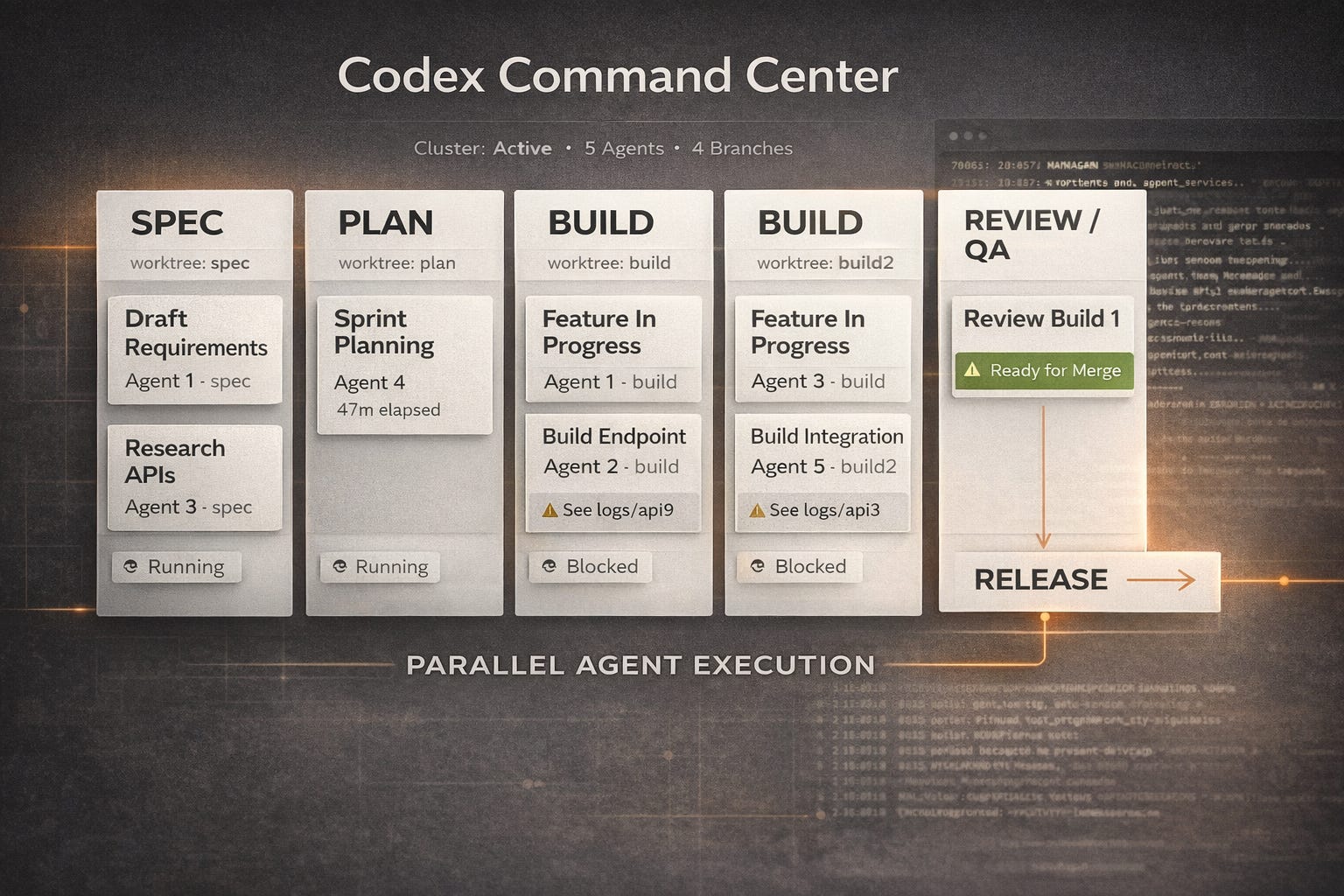
Everyone’s arguing about whether Codex is a Cursor killer.
Wrong fight.
The real shift is developer-as-PM: you managing a squad of agents that work in parallel while you enforce quality and ship velocity.
The Problem
Single-agent coding tools hit the same wall:
One thread at a time
Context drift
PR collisions
“It compiles” masquerading as “it’s done”
The bottleneck isn’t intelligence.
It’s coordination:
Clear roles
Isolation (so parallel work doesn’t collide)
Tool-integrated workflows (design → tickets → deploy)
Merge gates (tests + review + spec alignment)
The Hotlist Way
Codex is the right direction (as described in the Neuron email): multi-agent coordination + isolated branches + tool-connected workflows.
Here’s the operating system to make it real.
1) Run agents like roles (no freelancers in prod)
Spec Agent (PM): acceptance criteria, edge cases, non-goals
Plan Agent (Architect): steps, file map, risks, checkpoints
Builder Agents (2–4): parallel implementation in isolated worktrees
Reviewer Agent: correctness, security flags, “matches spec?”
QA Agent: tests, CI triage, repro steps
Rule: No role = no output.
2) Enforce isolation as the default
Parallel agents require separate sandboxes:
One worktree/branch per agent
Explicit task ownership
Known merge order (dependency graph)
Speed without isolation is just faster collisions.
3) “Skills” are the wedge: ship workflows, not snippets
If Skills connect agents to tools, aim them at full delivery:
Figma → implementation (UI parity)
Linear → triage + release tracking
Cloud deploys (Vercel/Netlify/Render/Cloudflare)
Artifacts (release notes docs, PDFs, spreadsheets)
Your product isn’t code. It’s shipping.
4) Automations: remove the recurring tax
Schedule the boring-but-critical loops:
Daily issue triage
CI failure summaries + suggested fixes
Release notes drafts from merged PRs
Dependency update PRs with tests
Consistency is leverage.
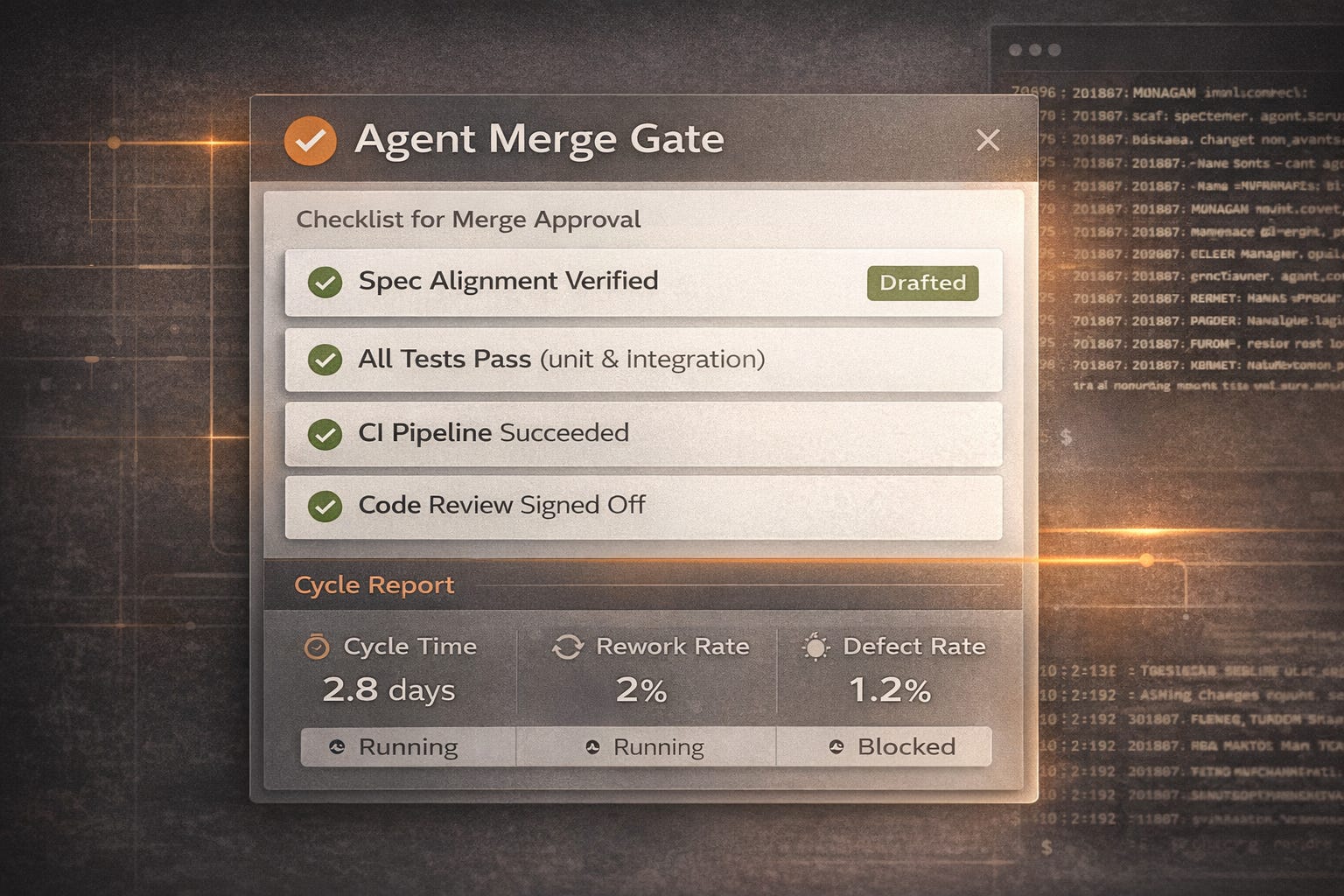
5) The Merge Gate (non-negotiable)
Nothing merges unless:
Spec link included
Diff summary (“what changed + why”)
Tests added/updated
CI green
Reviewer sign-off (agent + optional human)
The Boardroom Takeaway
Codex isn’t scary because it writes code.
It’s scary because it makes parallel execution cheap.
The winners won’t be the teams with better prompts.
They’ll be the teams with a better agent operating system:
roles → isolation → Skills → Automations → merge gates.